

What should a fitness program in assisted living include?
A well-designed fitness program for older adults should support strength, balance, flexibility, endurance, and everyday movement—not athletic performance. In assisted living, activities should be adaptable for people who walk independently, use a cane or walker, remain seated for much of the day, or live with conditions such as arthritis, stroke-related weakness, or memory loss.
For residents in Media, PA, a practical program may combine indoor exercise with short walks outdoors when weather and walking surfaces are suitable. Pennsylvania’s changing seasons make indoor options especially useful during icy winter conditions, heavy rain, heat, and humid summer days.
A balanced program commonly includes:
- Seated or standing strength exercises
- Walking or other low-impact aerobic movement
- Balance and fall-prevention activities
- Gentle stretching and range-of-motion exercises
- Breathing, posture, or relaxation work
- Social activities that involve movement, such as dancing or group games
Pennsylvania regulations require assisted living residences to provide a daily program of social and recreational activities. That does not mean every residence offers the same type or amount of exercise, so residents and families should look closely at how movement activities are planned and adapted. ([pacodeandbulletin.gov](https://www.pacodeandbulletin.gov/display/pacode?file=%2Fsecure%2Fpacode%2Fdata%2F055%2Fchapter2800%2Fchap2800toc.html&utm_source=openai))
How much exercise do older adults need?
Federal guidance recommends that adults age 65 and older work toward a weekly combination of aerobic activity, muscle strengthening, and balance exercises. The general target is 150 minutes of moderate-intensity aerobic activity, muscle-strengthening activities on at least two days, and regular balance work. However, people should be active according to their abilities and health conditions; some movement is better than none. ([cdc.gov](https://cdc.gov/physical-activity-basics/guidelines/older-adults.html?utm_source=openai))
Residents do not need to complete the full target in long sessions. Five- or 10-minute periods of walking, seated movement, or light strengthening can be spread throughout the day. Someone who tires easily may benefit from several short sessions rather than one 30-minute class.
Moderate activity generally makes breathing faster but still allows conversation. For one resident, a brisk hallway walk may provide moderate effort. For another, gentle seated leg movements may be an appropriate starting point.
Which exercises are most useful for daily independence?
Exercises that resemble daily tasks are often the most practical. Strengthening the legs can help with standing from a chair, transferring to a bed, or climbing a few steps. Upper-body exercises may support dressing, reaching, and using a walker safely.
Examples may include:
- Repeatedly standing from a sturdy chair, with support as needed
- Straightening one knee while seated
- Marching in place while holding a stable surface
- Raising the arms with light resistance or no weights
- Pulling a resistance band toward the body
- Practicing heel-to-toe steps beside a secure handrail
- Turning slowly and changing direction under supervision
Balance exercises should be performed near a stable support and should be modified for anyone with a history of falls, dizziness, vision problems, or significant weakness. The goal is controlled movement, not testing how long someone can stand on one leg.
The CDC identifies balance, strength, and multicomponent activities as useful for improving physical function and reducing the risk of injury from falls. ([cdc.gov](https://cdc.gov/physical-activity-basics/adding-older-adults/what-counts.html?utm_source=openai))
Can residents with arthritis, weakness, or mobility limitations participate?
Yes, but the activity needs to be adjusted. A person with arthritis may tolerate gentle movement better after a warm-up, while someone with weakness on one side may need seated exercises or carefully supported standing work. Wheelchair users can often participate in upper-body strengthening, posture exercises, guided stretching, and adapted aerobic activity.
A common misconception is that exercise must be strenuous to be beneficial. For many residents, success may mean moving more comfortably, standing for a few additional seconds, walking farther down a hallway, or recovering more easily after a transfer.
Pain should not be ignored. Mild muscle effort or temporary stiffness may occur, but sharp pain, chest discomfort, unusual shortness of breath, faintness, new confusion, or sudden weakness requires stopping the activity and following the residence’s medical-safety procedures.
People with chronic conditions should understand how their health needs affect exercise. Medication timing, blood sugar concerns, oxygen use, blood pressure changes, joint replacements, and recent hospitalizations may all influence what is appropriate.
How can exercise reduce fall risk?
Fall prevention is not limited to practicing balance. It also involves leg strength, walking ability, attention, vision, footwear, lighting, and the design of the activity space.
A useful fall-prevention session may include:
- Repeated sit-to-stand movements
- Gentle weight shifting from side to side
- Stepping forward, backward, and sideways
- Turning while holding a stable support
- Walking at a comfortable pace
- Practicing how to pause before changing direction
The area should be free of loose rugs, clutter, wet flooring, poorly placed furniture, and equipment that could be tripped over. Supportive shoes are generally safer than loose slippers or smooth socks.
Residents should also be cautious outdoors. The National Institute on Aging recommends checking weather conditions, wearing suitable footwear, watching for uneven sidewalks, and avoiding icy or otherwise hazardous surfaces. In the colder months, indoor walking routes may be safer than outdoor paths. ([nia.nih.gov](https://www.nia.nih.gov/health/exercise-and-physical-activity/safety-tips-exercising-outdoors-older-adults?utm_source=openai))
What makes a group fitness class accessible?
A good class provides choices rather than expecting everyone to perform the same movement. The instructor or activity leader should demonstrate seated and standing versions, allow rest periods, use clear instructions, and avoid rushing transitions.
Helpful features include:
- Chairs with arms and stable legs
- Enough space for walkers and wheelchairs
- Good lighting and visible floor changes
- Water available when appropriate
- A gradual warm-up and cool-down
- Music at a volume that allows instructions to be heard
- Simple reminders about breathing and posture
- Permission to observe or leave without embarrassment
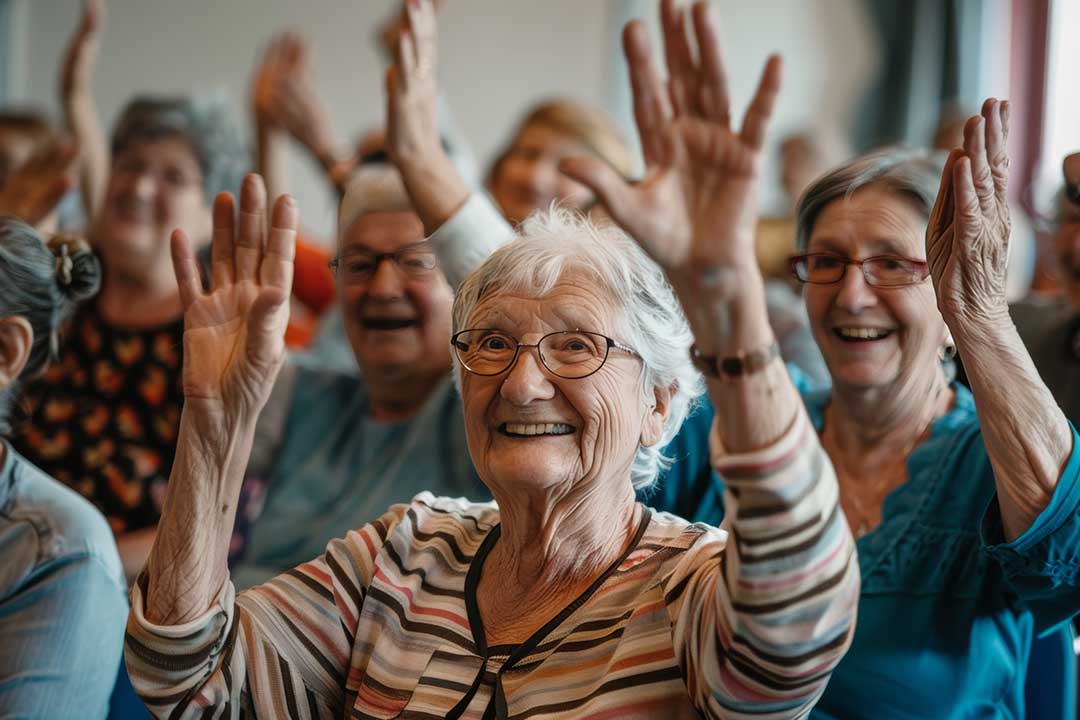
Group programs can also support social connection. Residents may be more likely to attend when a class feels welcoming and predictable. Music, familiar routines, and partner activities can make movement feel less like a medical task and more like part of the community’s daily rhythm.
What questions should residents and families ask?
Before joining a program, residents may want to ask:
- Is the activity suitable for people who use walkers or wheelchairs?
- Are seated alternatives provided?
- How are new residents screened for safety needs?
- What happens if someone becomes dizzy or tired?
- Is the space large enough for mobility aids?
- Are outdoor activities canceled during ice, extreme heat, or poor air quality?
- Can the program accommodate hearing, vision, or memory-related needs?
- How often are strength and balance activities offered?
- Are personal goals included in the resident’s support planning?
A fitness schedule should complement, not replace, individualized medical or rehabilitation guidance. Assisted living exercise is most useful when it is consistent, appropriately challenging, and connected to the movements residents need for everyday life.
